




Andreas Almgren has established himself as one of Europe’s most formidable long-distance runners. With multiple national and European records and global championship medals, he continues to redefine what’s possible on the track and road.
Behind every record and fast finish is Andreas's data-driven approach to his training. Everything is built on carefully controlled threshold training and a deep understanding of numbers behind each workout.
Dive into Andreas Almgren’s training and discover how structure and consistency help him prepare to race at the very highest level.
The Structure Behind Andreas Almgren’s Training
Andreas Almgren follows a structured principle of periodization, putting together a consistent block of training ahead of a key race to test his fitness. Rather than relying on constant high-intensity sessions, Andreas Almgren builds his fitness through consistent weeks of quality work.
"I’ll keep a set structure for maybe six weeks, and adjust if needed. For example, I restarted full training in mid-November after Valencia Half Marathon with six good weeks of training, then two weeks of race prep.
I don’t think training should be too static. But once you decide on a period, you should be quite consistent within that period"
The consistency and repetition of workouts week-over-week allows him to maximize his adaptations. This also keeps a similar weekly training load throughout the block, allowing him to stay healthy.
|
COROS Coaches: Changing your training focus throughout the season is known as periodization. To learn more on how to apply this to your training, read our periodization blog. |
Threshold Training

Threshold training is the backbone of Andreas Almgren’s training. The key focus is holding the effort exactly where it needs to be. Heart rate plays an instrumental role in managing a precise effort.
"I usually check four things: speed, lactate, heart rate, and overall feeling. I get a baseline for how I want workouts to feel. It’s not just “go out and run threshold and you’re going to run fast”, there’s a lot more to it than that."
In his threshold sessions, Andreas Almgren aims for a heart rate around 167-178bpm, where he can hit paces as high as 2:40/km.
"I’ve been doing threshold training for a while, so I know how I want each workout to feel and what lactate values work for me long-term. That’s why heart-rate data from COROS is a very important part of the overall picture."
With a detailed log of heart rate and speed data for all of his sessions, Andreas Almgren uses COROS to compare his data across weeks and training blocks.
Inside Andreas Almgren's Key Sessions
After building a strong foundation, Andreas Almgren ensures he is race ready through a series of key workout sessions. Ahead of Valencia 10KM, Andreas ran two key workouts to sharpen his fitness and build confidence heading into the race. At the end of a 170km week, Andreas had a hard 3 x 3km with three minutes recovery, completing his reps in 8:00, 7:52 and 7:43, this was a sign for Andreas Almgren that his fitness was in the right place.
As one of the final checks before racing, this workout, with short recoveries, shows whether Andreas can hold race pace under fatigue. If the numbers line up and effort feels controlled, it’s a clear sign he’s ready to race.
Workout Type: Race-Pace Intervals
Structure: 10 x 1km off 1 minute recovery
Average Pace: 2:34 per km
Average Heart Rate: 155bpm

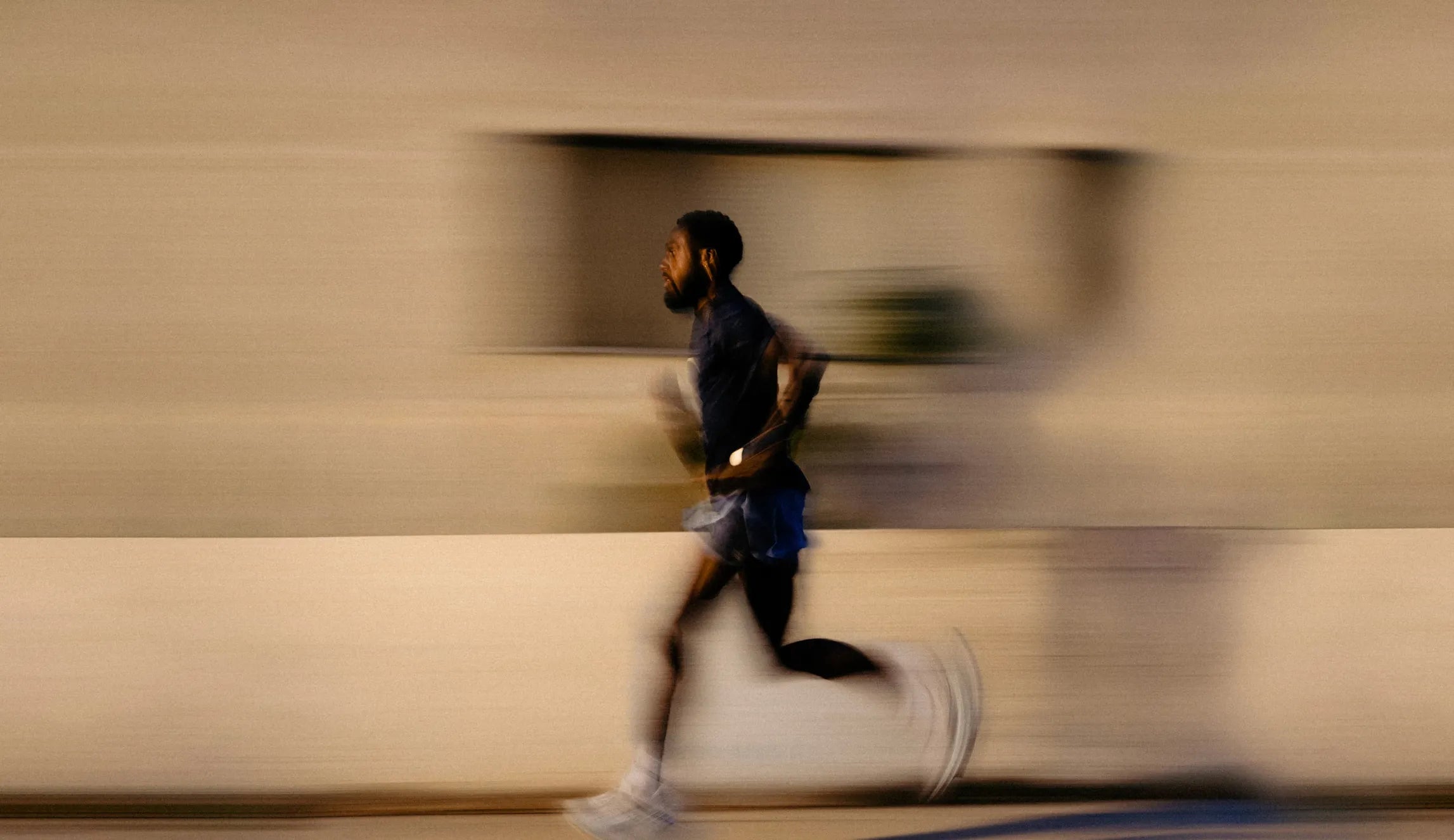
Andreas Almgren during a 10 x 1km workout