

It’s been almost exactly two months since my climbing partner Cristina and I arrived at Camp 2 of Baruntse (7,129m) during a rotation to acclimatize for our summit push. Two months since we were breathing the thin air at 6400m and gazing up towards the summit ridge of this majestic peak, as well as the nearby 8000m peak Makalu (8485m) just next to it. Two months since being immersed in the remote depths of the Himalayas. Unfortunately, the universe had other plans for us this time than summitting Baruntse. But what an adventure it turned out to be nonetheless.

It was on October 15th, after a slightly terrifying flight out to the “Most dangerous airport in the world,” aka Lukla Airport in Nepal, that our journey to Baruntse truly began. The plan was to trek to Baruntse Base Camp (4,900m) over a course of about two weeks, to allow our bodies to acclimatize properly. Baruntse BC is located in a remote valley of the Everest region called Hinku – far removed from the busy highway of the Everest Base Camp trek…
Mera Peak 6,476m single push: 6h 30 min up and down
On the way to Baruntse, we wanted to climb Mera Peak 6,476m in a single push from the village of Khare. This was our primary acclimatization objective. Climbing Mera Peak in a day was an incredible experience and reminded me why I love this style of alpinism so much, where you’re only carrying the bare essentials in your pack, you’re moving fast (well, as fast as humanly possible at that altitude) and most of the time you’re back down in time for lunch. Cristina and I had a chill breakfast at our lodge in Khare, then set off for the summit at 8:30 am. Boy did we get a lot of looks from other climbers on the way there – and back. I guess it’s not every day you see people running up and down a 6000m peak… Needless to say, my coke & sizzling momos afterwards tasted heavenly.


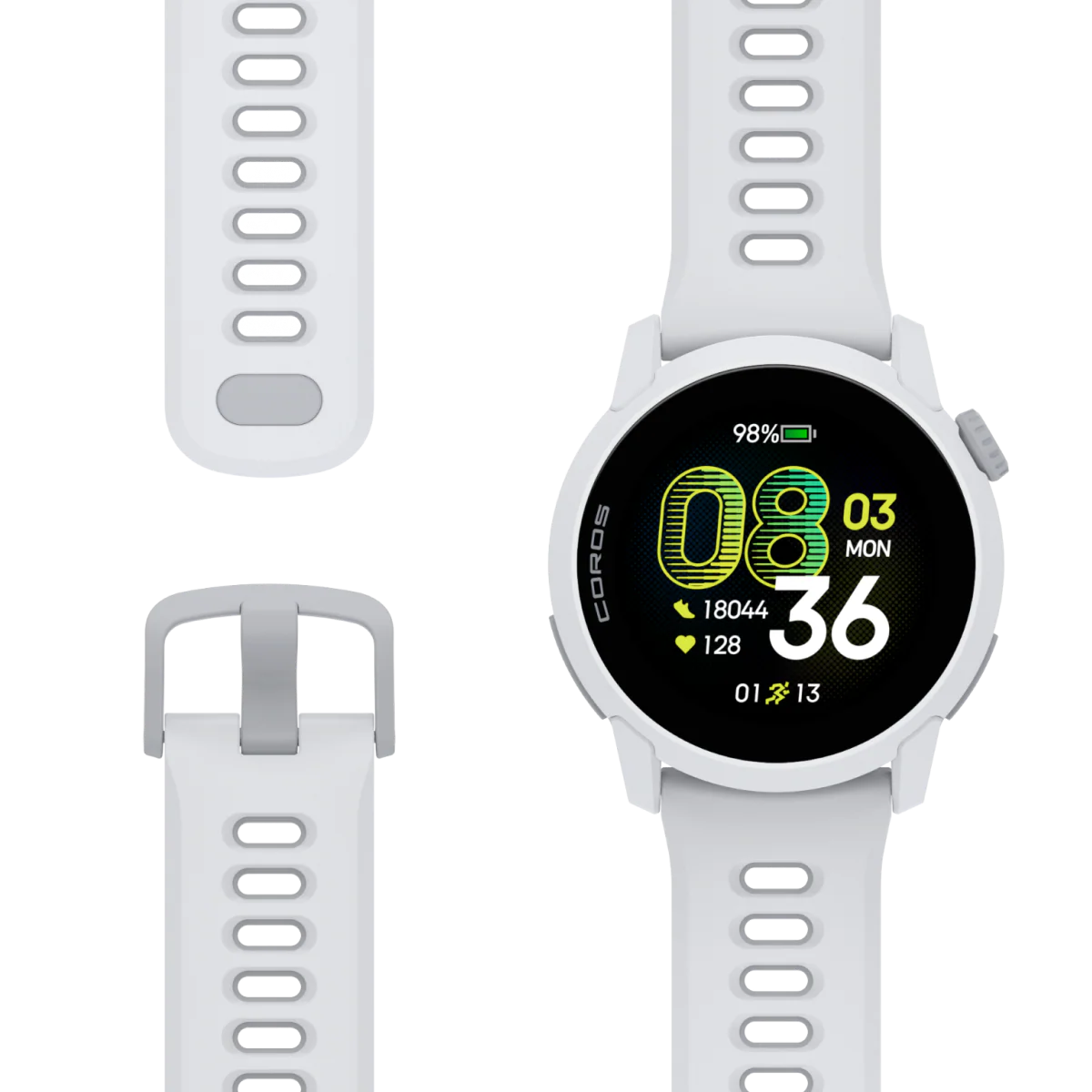
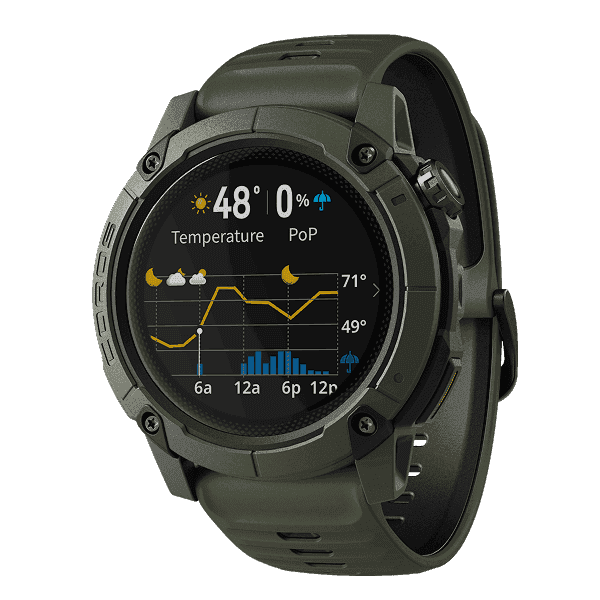
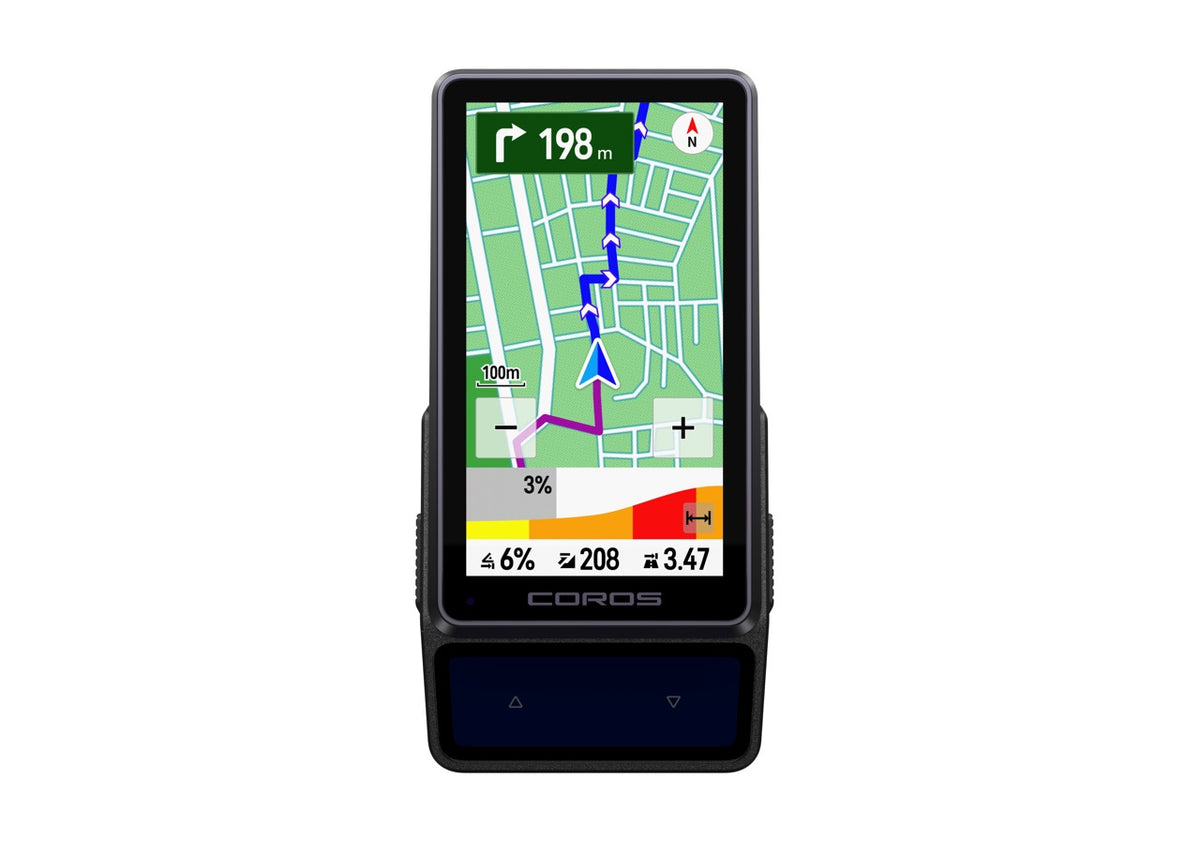
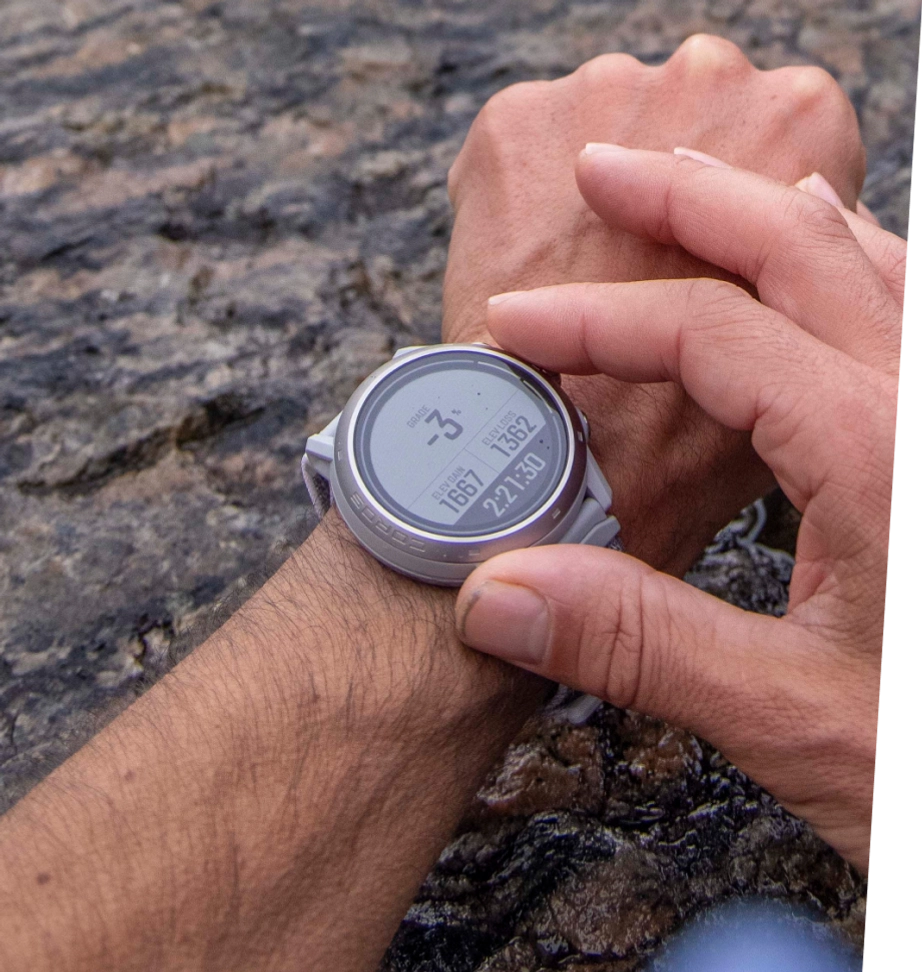
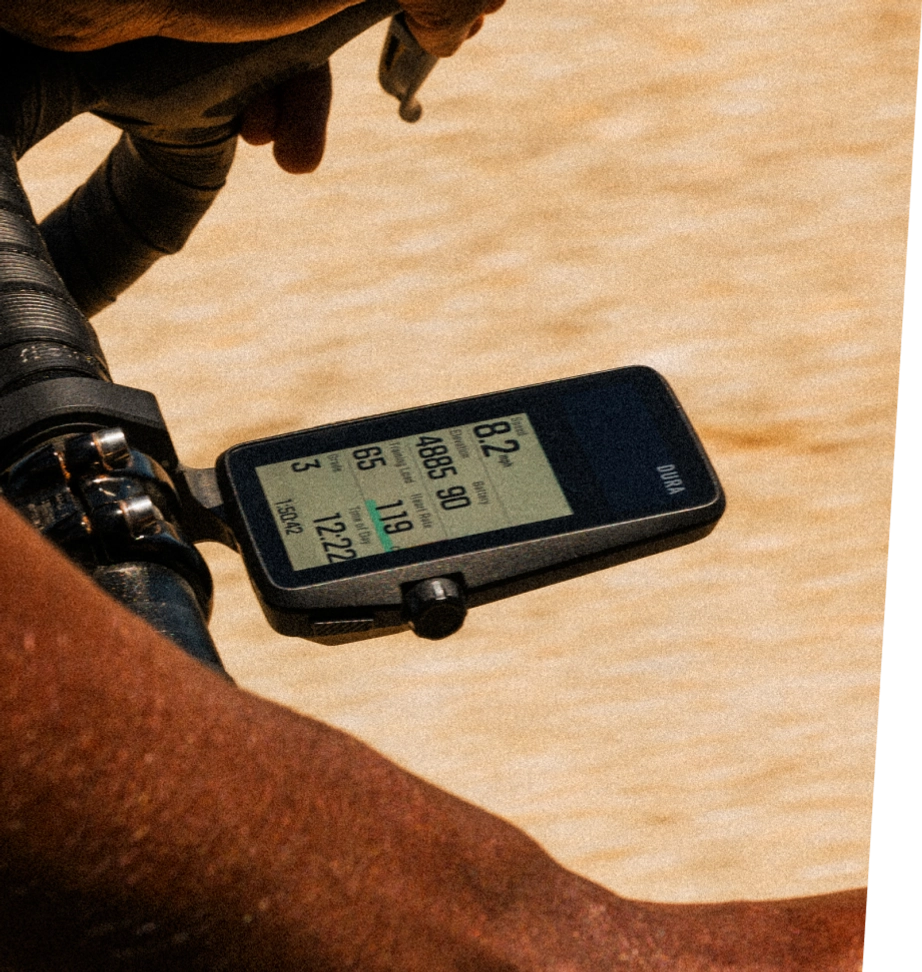
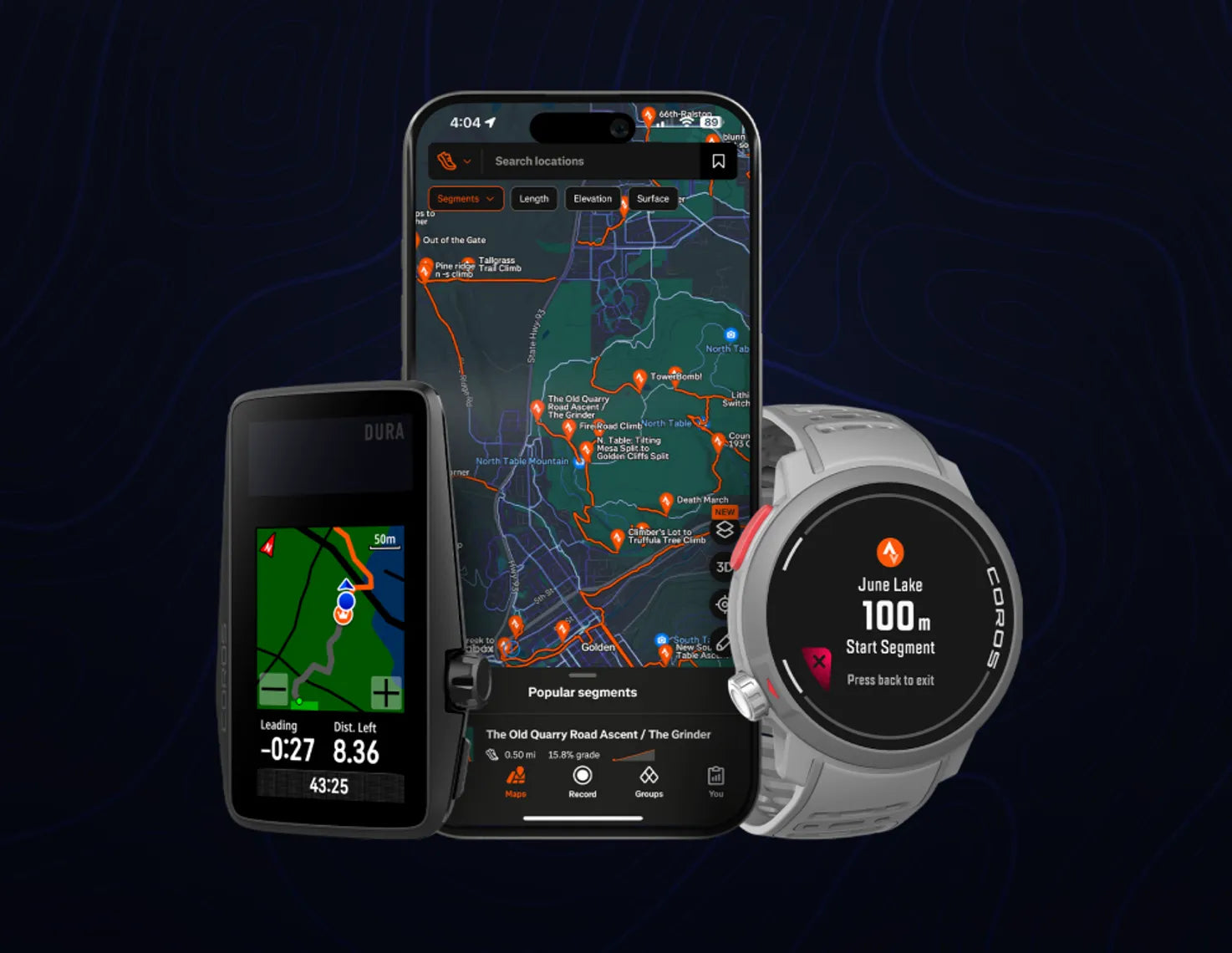
After Mera Peak, our spirits were high for Baruntse. We trekked to BC in one day from Khare, a journey that most expedition teams do in 2-3 days. During the entire trek from Lukla to BC I used the Navigation feature on my Coros Vertix 2S together with GPX routes I had created on Strava, in order to make sure that we always stayed on track.
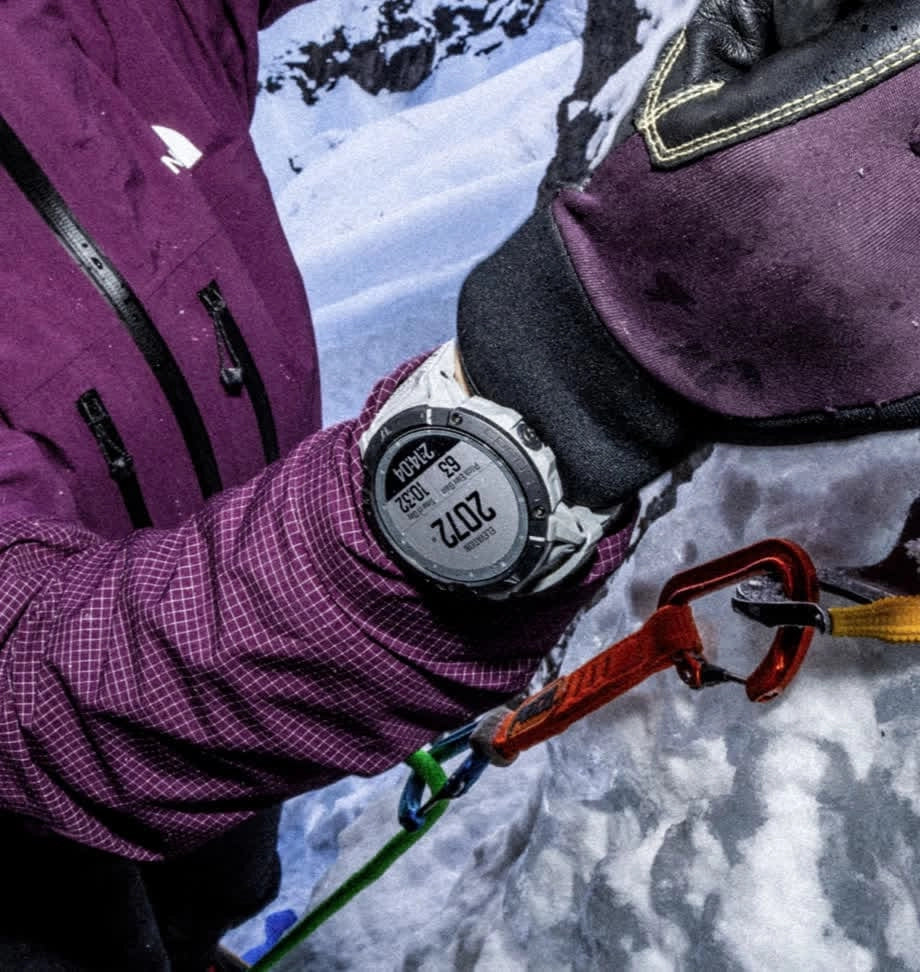
Two days after arriving in Baruntse BC, on October 26th, we went for our first acclimatization rotation to Camp 2 at 6,400m. I’m not going to lie – it was definitely a struggle. Our bodies were not yet acclimatized optimally, and every step felt like a slight eternity. But we took it slow, made sure to drink and eat enough along the way – and of course, I also checked my HR regularly on my watch to make sure the intensity and effort remained relatively low. Another cool thing about my Vertix was that I had Altitude Alert mode activated. Whenever my heart rate reached a certain point, the watch would tell me to be careful about the effort at that altitude.

Acclimatizing with the help of my Coros Vertix 2S
I should also mention that I checked my acclimatization adaptations regularly during the expedition using a combination of factors: resting HR, sleep quality, HRV (all features on my watch), as well as an oxygen saturation meter that I had brought. Additionally, I made sure to stay at a relatively low RPE (rate of perceived exertion) during effort, around 3-4 on a scale from 1 to 10 and always listening to the signs of my body. Luckily, except for a few minor headaches and stomach issues, my acclimatization this time went exceptionally well and I never had any issues with the altitude. I even slept like a baby practically every night at almost 5000m.
The mountain had other plans for us
Back to Baruntse. After our rotation to Camp 2 we knew that the weather forecast was showing snowfall for the next few days. Perfect time to relax and recharge before the next push, Cristina and I thought. But we had no idea what was to follow…

The next morning after coming back from C2, we woke up to the promised snowfall at Base Camp. But what we didn’t know at the time was that it would practically not stop snowing for the week following. Every morning we would wake up to even more snow. At first, we were hopeful that continuing our climb would be possible with the good weather that was said to soon return. But the more it kept snowing, the more unrealistic our hopes became. Other teams at Baruntse began cancelling, and we found out that no one else was coming to BC. And going up on our own, just Cristina and I, would simply be 1) too difficult because we would have to break trail on our own up to the summit 7,129m and 2) too dangerous due to the high avalanche risk.
Long story short, eventually we also realized our defeat and that it was time for us to leave Baruntse this time. It turned out that this “snowfall” was actually a cyclone and the worst snowfall that Nepal had seen in over 30 years.
Expedition 2.0 begins – with a new objective
Five days after deciding to walk out of Base Camp, we arrived back in civilization. In other words, Lukla. This trek was an adventure of its own – breaking trail through meter-deep snow at 5000m, navigating through whiteouts on glaciers, and doing our best to keep hypothermia and frostbite at bay… But that is a story for another time.
 Funny enough, when we got back to Lukla, I was still motivated for more. Maybe I felt like I hadn’t yet exerted my full potential, and I was still feeling fit and healthy. And by now, over three weeks after first touching down on Nepalese soil, I was also extremely well acclimatized. I knew I wanted to climb another mountain, but with only five days left before our scheduled flight back to Kathmandu, it was going to be tight.

In the end, I decided to attempt a solo single push on Island Peak 6,189m, a popular 6000m peak located not far from Mount Everest. Cristina and I parted ways for these five days – while I was on my way to Island Peak, she went for an epic ultra run around Namche Bazaar and Gokyo.
First Himalayan peak solo
I still can’t decide what I enjoyed more – climbing Mera Peak in 6h 30min and sharing that experience together with Cristina, or climbing Island Peak by myself, also in a day (7h 30 mins to be exact). I can definitely say that it was something truly special to stand at the summit of Island Peak after having left Chukhhung the same morning, only a few hours earlier. Aside from a little curious black bird, I was completely alone on the summit. Almost no wind, a bluebird sky and mother Nature treated me to an incredible 360 degree view of the surrounding 7000 and 8000m peaks.
And what’s more, this summit was special because although I did not get the chance to climb Baruntse this time, this trip had nevertheless been an incredible experience. This was my third trip to Nepal, and once again I learned so much about this wonderful country and culture, as well as plenty of things about myself – as an alpinist and as a human being. I got to climb two 6000m peaks, set my personal altitude record with Mera Peak at 6,476m, and I climbed my first Himalayan peak solo.
In other words, standing at the top of Island Peak was the perfect culmination of my five-week trip to Nepal, and although I cannot quite explain to you how, it was definitely also the beginning of an entirely new journey. One that feels even greater…

One thing I can tell you with certainty though, is that it will not take long until I return to the Himalayas. I have a few ideas in mind already, and I’m excited to figure out how to turn those ideas into reality. Stay tuned for more!
For more updates, follow me on Instagram: @jennifromtherocks
With love,
Jënni Jalonen